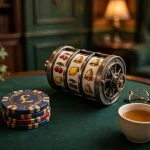
Hi-Lo Casino UK: Rules, Choices and Game Formats
 Available in GB

Hi-Lo games compare a revealed card with the next one, with formats that vary in how cards, pots and collect-or-parlay choices work.
Table of Contents
- How Hi-Lo Card Decisions Work
- Playing a Round and Knowing When to Stop
- Higher-or-Lower Strategy and the Limits of Return Figures
- Draw Hi-Lo: Deck Composition and Basic Strategy
- Hi-Lo in an Online Casino: Pots, Cards and Outcomes
- Live Hi-Lo: Reference Cards and the Shuffle
- Reel-Based Hi-Lo and the Collect-or-Parlay Choice
- Assessing Hi-Lo Options Without a Ranked List
- UK Hi-Lo Casino Sites: Licensing and Player Protections
- Live Games
How Hi-Lo Card Decisions Work
Hi-Lo is built around a comparison between a card already shown and a card that has not yet been revealed. The player predicts whether the next card will have a higher or lower value than the current one. The decision is relative: a card is not simply “high” or “low” in isolation, but higher or lower when set against the reference card.
Card values run from ace at one point to king at thirteen points. That ordered scale gives the comparison its meaning. For instance, a prediction of “higher” concerns any next card whose value exceeds the current card’s value; “lower” concerns a value beneath it. The relevant distinction is numerical rank, rather than a separate category of high cards and low cards.
This structure makes the current card essential to each choice. The same rank can invite different predictions depending on what is showing: a value near the bottom of the scale has more possible ranks above it, while one near the top has more below it. That observation describes the available comparisons, not a recommendation about which option to select. Strategy and the relative merits of bets are separate questions.
Choosing a UK hi-lo casino in 2026 means finding an option that fits your preferences and understanding what to expect when you withdraw. This list notes the payout speed provided for each operator.
1. EvoSpin
Payout speed: 1-3 business days EvoSpin lists a payout speed of 1–3 business days, a useful detail to consider when reviewing its withdrawal arrangements.
2. Chanze
Payout speed: 1-3 business days Chanze lists a payout speed of 1–3 business days, giving readers a stated timeframe to bear in mind.
3. SpinFormula
Payout speed: 1-3 business days SpinFormula lists a payout speed of 1–3 business days. This offers a clear reference point for its payout timing.
4. Britsino
Payout speed: 1-3 business days Britsino lists a payout speed of 1–3 business days, a practical detail for readers considering how long withdrawals may take.
5. BeOnBet
Payout speed: 1-3 business days BeOnBet lists a payout speed of 1–3 business days, providing a stated timeframe for payouts.
6. NightWin
Payout speed: 1-3 business days NightWin lists a payout speed of 1–3 business days. Keep this stated timeframe in mind when considering its payout arrangements.
7. x3bet
Payout speed: 1-3 business days x3bet lists a payout speed of 1–3 business days, which gives readers a straightforward indication of its stated payout timing.
8. NightLuck
Payout speed: 1-3 business days NightLuck lists a payout speed of 1–3 business days, a useful point of reference for withdrawal planning.
9. Zombillion
Payout speed: 1-3 business days Zombillion lists a payout speed of 1–3 business days. That stated timeframe is the available detail about its payouts.
10. Jetsetspins
Payout speed: 1-3 business days Jetsetspins lists a payout speed of 1–3 business days, giving readers a stated timeframe to consider for withdrawals.
Some versions also allow a prediction that the next card will have the same value as the current one. That adds an equal-value outcome to the choice, rather than treating every decision as a strict higher-or-lower comparison. The option is not universal, so the available selection depends on the particular version being played. Where an equal-value prediction is absent, the choice is confined to the two directions.
It is useful to distinguish a card’s value from the outcome of a bet. The value scale determines whether the next card is higher, lower or, where permitted, equal. What follows from a correct or incorrect prediction depends on the rules of the particular game. The basic comparison alone does not establish a common payout, nor does it determine how a tie is handled when the player has chosen higher or lower. Those details cannot be inferred from the card ranking.
Hi-Lo therefore has a simple central question but a rule set that may vary around it. The core remains a comparison of the next card’s value with the displayed reference card, using the ace-to-king scale. A version may broaden the choices by including the same-value outcome, while another may offer only higher and lower. These distinctions matter because a prediction is meaningful only in relation to the options that version actually presents.
Live Baccarat Online Casinos in the UK: A Practical Guide · Deal or No Deal Casino UK: Slot Format Guide
The name “Hi-Lo” describes the direction of the comparison, not a single universal dealing procedure or a uniform set of payout rules. Across versions, the higher-or-lower decision is the organising principle; further details belong to the rules of the specific game. This basic framework makes it possible to read a decision without confusing the card’s rank, the direction selected and the eventual treatment of the result.
Playing a Round and Knowing When to Stop
A round begins with a card dealt at random. The player then predicts whether the next card will rank above or below it. If the starting value makes either choice unclear, the decision is still between those two directions; the card values determine which prediction is correct.
A correct call is paid according to the game’s pay table. In a format where the next card matches the current value, that result may be treated as a push rather than a win or loss. An incorrect prediction loses the money placed on that decision. It also voids any winnings already collected during the same game, so a successful earlier call does not protect the running total from a later mistake.
Once the opening decision has been made, continuing is not compulsory. The player can end the game and take the winnings accumulated to that point, or make another higher-or-lower call and accept the risk attached to it. The practical stopping point is therefore a choice between securing the current total and keeping the sequence going; there is no need to continue simply because a previous prediction was successful.
How to Play Hi-Lo
Step 1: Receive Card
A starting card is dealt at random to serve as the reference point.
Step 2: Predict Direction
The player predicts whether the next revealed card will rank higher or lower than the current one.
Step 3: Determine Outcome
The next card is revealed; a correct prediction pays according to the pay table, while an incorrect one loses the wager.
Step 4: Decide to Stop
The player chooses whether to secure accumulated winnings or continue with another prediction.
This is the basic sequence behind how to play Hi-Lo at a casino: receive a starting card, choose a direction for the next one, and decide whether to stop after a decision. The precise treatment of ties and payments depends on the format’s rules and pay table, so those details should be read as part of the game rather than assumed to be identical across every Hi-Lo version.
Higher-or-Lower Strategy and the Limits of Return Figures
For standard Higher and Lower bets, the stated strategic guidance is to select the option offering the larger payout. That is a comparison between the available prices, not a guarantee that the choice is more likely to win. Without the relevant pay table and the game’s precise rules, the recommendation cannot be extended into a universal method for every Hi-Lo casino game.
Proposition bets require a different consideration. The exposed card cannot be drawn again because it is no longer in the shoe. A proposition wager should therefore be avoided when its winning condition depends on that unavailable card. Treating the visible card as though it remained among the possible outcomes would distort the decision: the set of cards that can still appear has changed.
Live Blackjack Online Casinos in the UK · Live Roulette UK with English-Speaking Dealers
A specialist review reports a return of 96.23% for the game when betting higher than 4 or lower than 10. This is a figure attached to those specified choices, not a general return for every Hi-Lo game, bet type or table. It should not be read as a forecast of an individual session, nor as evidence that either choice will produce a particular result. The reported percentage also does not establish that the same return applies where rules, payouts or the available bets differ.
The distinction between a strategic recommendation and a return figure matters. Choosing the higher-paying side describes how to compare offered payouts; the reported percentage describes an outcome calculated or stated for particular bets. Neither removes uncertainty from a sequence of decisions. In particular, the return figure does not supply a basis for assuming that proposition wagers have the same value or that a strategy transfers unchanged to a different Hi-Lo format.
Accordingly, the available guidance is narrow: compare the payouts for Higher and Lower, and account for the fact that the exposed card is unavailable when considering a proposition bet. The 96.23% figure belongs only with the stated higher-than-4 or lower-than-10 conditions and the specialist review reporting it. It is not a dependable market-wide benchmark for all casino versions of Hi-Lo.
Draw Hi-Lo: Deck Composition and Basic Strategy
Draw Hi-Lo uses one standard deck of 52 cards, with aces treated as the lowest rank. Cards are removed from play after they appear rather than being returned to the deck. Consequently, a card already seen cannot appear again during that game.
Deck Composition
Draw Hi-Lo uses one standard 52-card deck where aces are the lowest rank and cards are removed from play after they appear.
This depletion matters to the decision process. The probabilities of the remaining ranks change as cards are revealed, so the next choice is made from a deck whose composition may differ from its starting state. The format is therefore distinct from versions that use several decks or return cards between rounds. Its rules do not depend on comparing a new card with an assumed, unchanged pack.
The reported return when basic strategy is followed is 96.07%. This figure is attributed to a specialist review, rather than presented as a universal property of every Draw Hi-Lo game. It describes an estimated return under the stated strategy, not a result guaranteed for an individual session. The return also should not be read as a fixed payout on each decision: results in a particular game can differ from a long-run calculation.
The term “basic strategy” refers to a prescribed approach to the available choices, but the reported percentage alone does not specify a complete decision chart or the pay table to which it applies. That distinction matters when comparing versions of the game: an identical deck structure does not, by itself, establish identical payouts or returns. The figure is best treated as a reported estimate tied to the strategy and game conditions used in that review.
For this variant, the defining features are the single deck, low aces and removal of used cards. Together, they make the remaining-card composition relevant as play proceeds. The 96.07% return is a separate, qualified claim about basic strategy, not a guarantee that following any general higher-or-lower rule will produce that result.
Live Casino Lightning Roulette UK: What to Know · French Roulette Online Casinos in the UK: Rules
Hi-Lo in an Online Casino: Pots, Cards and Outcomes
An online Hi-Lo game can be presented as a sequence of card comparisons. A card appears as the current reference, and the player chooses whether the next revealed card will rank above or below it. The outcome depends on that comparison: a correct prediction adds winnings to the player’s pot, while an incorrect one means the money placed on that guess is lost. The pot therefore records what has accumulated through successful predictions, rather than changing the underlying card comparison.
The card supply matters because it affects what can appear later in a game. One description uses a single 52-card deck, with each card removed from play after it has been used. On that account, a card that has appeared cannot turn up again during the same game. The remaining deck changes as cards are revealed, so the set of possible next cards is not fixed throughout play.
However, accounts of the online format do not agree on the deck arrangement. A specialist review describes a different setup: six decks of 48 cards, with continuous shuffling. The single-deck description and the multi-deck, continuously shuffled description should not be blended into a single set of rules.
This distinction is relevant when interpreting a run of outcomes. Under the single-deck account, used cards are absent from the remainder of that game. Under the other account, continuous shuffling is described instead. It would therefore be inaccurate to assume that a card’s earlier appearance has the same implications across all online versions. The card system should be understood as part of the particular game’s stated rules, not inferred solely from the Hi-Lo name.
Online Slots Payout Percentage: Understanding RTP
The pot and the deck also describe different parts of play. The pot reflects the effect of guesses on winnings: successful calls increase it, while a failed call loses the money wagered on that prediction. No broader claim about the frequency of particular outcomes follows from these mechanics alone.
Accordingly, “online Hi-Lo” identifies the basic higher-or-lower prediction, but does not by itself settle the card-handling rules. A game using a depleted single deck is materially distinct in that respect from one described as using multiple decks and continuous shuffling. The outcome of each guess remains a comparison between the current card and the next reveal; the treatment of previously seen cards depends on which format is actually being described.
Live Hi-Lo: Reference Cards and the Shuffle
The described live Hi-Lo format links consecutive hands through a reference card. After a hand is completed, its winning card remains exposed. That card is then used as the point of comparison in the next round. The sequence therefore does not begin with an unseen reference card each time: the visible result of the previous hand carries forward.
Before the next winning card is revealed, three cards are burned. The next winning card, rather than those burned cards, becomes the result used in the game. Once that hand is complete, its winning card takes the exposed reference position for the following round. These steps form a repeated sequence: an exposed card provides the reference, three cards are burned, and a winning card is revealed and carried into the next hand.
Crazy Time Live Casino Game Show in the UK
The exposed card matters because it is not merely a record of what happened previously. It has a role in the next comparison. The sequence makes the connection between hands visible, while the burned cards separate the next winning card from the previous one.
A continuous shuffler is also part of the described format. Cards from the previous round are returned to it immediately, rather than being kept aside for the remainder of a longer sequence. This means the account combines a visible reference card with a deck process that recirculates cards from earlier play. The reference card remains relevant to the next comparison even as cards from the previous round go back into the shuffler.
That distinction is important when interpreting the sequence. An exposed card can serve as the reference without implying that every card from the previous hand stays out of circulation. In this format, the previous winning card is exposed for the next round, while cards from the preceding round are described as being returned to the continuous shuffler.
A specialist review describes the game as using six decks of 48 cards, with tens removed from each deck. The stated composition is also specific: it is not a standard 52-card deck, because tens are omitted. Without a confirmed deck count, the composition should not be used to infer the exact number of each card value available during play.
Deck Limitations
Since tens are omitted from each of the six decks in this format, the deck composition is not standard and cannot be used to infer the exact number of each card value available.
The continuous shuffler further limits what can be concluded from the card sequence alone. Since cards from the prior round are returned to it immediately, a simple count of cards seen in earlier hands cannot establish which cards remain available for the next one. The exposed winning card is an explicit reference for the next comparison, but it does not provide a complete record of the shuffler’s contents.
This live format should be understood on its own terms rather than treated as interchangeable with every game labelled Hi-Lo. Other versions can use different card arrangements or game processes. Here, the defining details are the carried-forward winning card, the burn of three cards before the next winning reveal, and the immediate return of cards from the previous round to a continuous shuffler. Those features describe the sequence, but they do not establish that every live casino presentation uses the same equipment or deck arrangement.
For a live Hi-Lo game, the visible card sequence can make the relationship between one hand and the next easier to follow. It also leaves an important distinction between what is specified and what is not: the previous winning card is used as the next reference, three cards are burned before the next winning card appears, and used cards are returned to a continuous shuffler. The six-deck description remains attributable to a specialist review, not a confirmed universal rule.
Monopoly Live Casino in the UK: Format Explained
Reel-Based Hi-Lo and the Collect-or-Parlay Choice
A reel-based Hi-Lo game uses a different mechanism from versions in which a card is drawn from a deck. In the description given by a specialist review, the player selects Higher or Lower on a single reel, and the reel’s result determines whether that prediction wins, loses or ties. This is a specific format, not evidence that all Hi-Lo games offered by online casinos use reels.
The distinction matters when interpreting labels such as “live Hi-Lo”. A reel-based game is not, on that description alone, a live-dealer game: its outcome is determined by a reel rather than by a revealed card. The label does not establish that a casino offers a live presenter, a physical deck or any particular dealing procedure. Those features cannot be inferred from the word “live” in a game name or search description.
How the reel result is treated
The choice is directional. A selection of Higher wins when the reel stops on a number in the higher direction; a selection of Lower wins when it stops in the lower direction. A result in the opposite direction loses, while a tie also counts as a loss in this reported format. Thus, a tie does not preserve the wager as a push.
This description does not specify how the reel’s numbers are arranged, how often each result can occur, or how a payout is calculated. Without those details, the direction of a prediction can be explained, but its likelihood or expected return cannot be established. Nor should the outcome rules of a reel game be transferred to a deck-based version: the two formats use different mechanisms, and the available description concerns only the reel.
Do
- Choose to collect winnings after a successful win to secure the amount.
- Understand that a tie results in a loss in the reel-based format.
Don’t
- Assume a tie preserves the wager as a push in reel-based games.
- Parlay winnings without considering that a subsequent loss voids all accumulated gains.
A losing guess has a direct consequence for the game’s accumulated winnings: winnings collected during that game are voided. This makes the distinction between winning a decision and securing a final amount important. A successful prediction may increase the amount in play, but it does not mean that the player has permanently banked that sum if the game continues.
Collecting or continuing
After a win, the described format offers a choice between collecting and starting over, or parlaying the original bet together with the winnings. Collecting ends the current attempt and sets aside its result. Parlaying instead carries the original stake and the win into another decision, leaving the amount exposed to the outcome of that next turn.
The two choices therefore differ in their treatment of risk, not in the direction of the prediction. Collecting stops the sequence after a win; parlaying continues it. If a later guess loses, the game’s accumulated winnings are voided, so continuing can put earlier gains at risk. A tie is also a losing result under the reported reel rules, rather than a neutral outcome that allows the same amount to be carried forward.
The description does not establish whether every reel-based Hi-Lo game provides both options, or whether the interface and payout terms are identical across operators. It supports a narrower conclusion: in the particular format described by a specialist review, a player chooses Higher or Lower on one reel, then decides after a win whether to collect or parlay. It does not support a general claim about the features of live Hi-Lo casino sites in the UK, nor does it establish that a reel-based game is available at any particular casino.
First-Deposit Casino Bonuses in the UK: What to Check
Assessing Hi-Lo Options Without a Ranked List
A ranking of Hi-Lo casinos would imply that the compared options had been assessed against consistent criteria. That would require evidence about which operators offer the game, the versions available, and comparable features such as pay tables and game rules. Without that basis, naming a “best” casino or presenting a league table would give an unsupported impression of certainty.
The label Hi-Lo does not identify one uniform product. It can refer to card games with different deck arrangements, or to a reel-based game in which a reel determines the outcome of a higher-or-lower choice. A comparison is meaningful only when it distinguishes these formats. Otherwise, games sharing a name may be treated as equivalent even though their rules and return calculations differ.
Return figures also need to be read in context. One specialist review reports a return of 100.36% when a card-counting strategy is followed. This is a figure tied to a stated strategy, not a general property of every Hi-Lo game or casino. It does not establish what another version returns, whether the same assumptions apply elsewhere, or what a player will receive in practice. A return estimate is therefore not, on its own, a sound basis for ranking operators.
Return Figures
Return percentages, such as the reported 100.36% for card-counting, are tied to specific strategies and should not be used as a general benchmark for ranking all Hi-Lo casinos.
Comparisons should separate game-level evidence from operator-level evidence. A game’s stated rules and pay table can help explain how its outcomes are assessed. An operator’s overall standing is a different question: it cannot be inferred from one game’s return figure, nor from the presence of Hi-Lo in a catalogue. Treating those questions as interchangeable risks turning a narrow statistic into a broad recommendation.
It does not support a reliable list of the best Hi-Lo casinos, online casinos or casino sites in the UK. A ranked list would need consistent, verifiable comparisons; without them, the distinction between an evidence-based assessment and promotion would be difficult to maintain.
This limitation does not make every comparison impossible. It defines what a comparison would need to show. The game format must be identified, the rules must be clear, and any return figure must be linked to the particular game and assumptions from which it was derived. Where those details are not comparable, a ranking should not be treated as an objective measure of quality.
A casino catalogue can also change, so a description of an offering is not necessarily a lasting account of what is available. Even when an operator lists a Hi-Lo title, that alone says little about how it compares with another version. A careful assessment therefore avoids converting a game name, an isolated percentage or a broad promotional label into a claim that one site is superior.
American Roulette at UK Online Casinos: Format Guide
For the same reason, “best” depends on what is being evaluated. A ranking based on game rules would not answer a question about the operator as a whole; a ranking based on a return estimate would require equivalent calculations for each game. The defensible conclusion is narrower: a card-counting return of 100.36% has been reported by a specialist review under a specified strategy, but it cannot substantiate a general ranking of Hi-Lo casinos.
UK Hi-Lo Casino Sites: Licensing and Player Protections
A Hi-Lo game’s rules do not establish whether the site offering it is authorised to serve customers in Britain. That is a separate question of regulation. The UK Gambling Commission oversees gambling activity, including online casinos, and is the sole regulator for commercial gambling in Great Britain. Its remit over remote gambling is based on the market being served: an operator offering remote gambling to consumers in Great Britain must hold the relevant Commission licence, even if its key equipment is located elsewhere.
The licensing system distinguishes between businesses and people who perform regulated roles. The Commission grants operating licences to gambling businesses and personal licences to individuals working in specified operational roles. A personal licence is not a substitute for the operator’s authorisation. For a legal online casino serving British customers, the business must hold a current operating licence from the Commission.
Licensing Verification
- Verify the operator’s licence number on the UK Gambling Commission public register.
- Confirm the registered business identity matches the site name.
- Set a financial limit before making the first deposit.
- Ensure the funding method is not a credit card.
The legal framework also has a geographical boundary. The Gambling Act 2005 applies in England, Wales and Scotland, but not Northern Ireland. The Commission’s role described here concerns Great Britain, so its remit should not be treated as a complete account of gambling regulation in every part of the UK. For customers in Great Britain, however, remote operators must be licensed to offer gambling to them, regardless of where the operator is based.
Checks before an account is funded
Age verification is a regulatory safeguard, not merely an account preference: an operator must check a customer’s age before allowing a deposit into a gambling account. Online gambling is legal for adults aged 18 and over when it takes place through an operator holding a UK Gambling Commission licence. A site’s own statement that it accepts British customers does not, by itself, establish that it has the required authorisation.
The Commission’s public register provides a way to check an operator’s status. The licence number should be verified against that register before depositing, rather than relying only on a logo or a claim displayed on a casino page. The registered business identity matters as well: the name shown in an offer or on a site should correspond to the licensed entity responsible for providing the gambling service. A licence authorises activity within its stated scope; it should not be read as an endorsement of a particular game or as a prediction of the customer’s experience.
Financial controls are also part of the remote gambling framework. Operators must prompt new customers to set a financial limit before their first deposit and make account-level limit controls accessible. These measures allow spending restrictions to be set and adjusted through the account, but they do not remove the need for customers to consider what they can afford. The existence of a limit-setting tool should not be confused with a guarantee that gambling will be free of harm.
Online European Roulette in the UK: Rules and Bets
Payment rules impose a further restriction. UK-licensed casinos cannot accept credit cards for gambling. Remote operators are also prohibited from accepting credit-card payments routed through a money service business for that purpose. The restriction extends to wallet payments where the wallet enables credit-card funds to be used for gambling. A payment option appearing on a site therefore does not necessarily mean every funding source linked to that option can be used.
Complaints and self-exclusion
UKGC-licensed casinos must provide responsible gambling tools, including self-exclusion. This gives customers a formal means to restrict their access to gambling with the operator. Self-exclusion is distinct from an ordinary account limit: it concerns preventing participation, rather than setting a spending boundary. GAMSTOP is a UK self-exclusion programme, while the operator must also provide the tools required for its own services.
If a dispute arises, licensed operators must have an internal complaints process and provide access to an approved Alternative Dispute Resolution service. The internal route is the starting point for a complaint about the operator; an approved ADR service offers an external route where the complaint remains unresolved and is eligible for referral. Keeping account records and relevant correspondence can help make the issue clear, although the outcome depends on the circumstances and applicable process.
Licensed remote operators are also required to contribute to the Research, Education and Treatment levy. This obligation forms part of the regulatory framework, but it does not replace the individual protections that should be available through account controls, self-exclusion and complaints procedures.
These safeguards apply within the licensing system and do not make every site that offers Hi-Lo equivalent. The relevant regulatory check is whether the business serving customers in Great Britain holds the appropriate current operating licence, followed by whether the required protections and routes are available. The game’s presence on a casino site, on its own, establishes neither point.
Live Games

Keno and Fast Payouts at UK Online Casinos
Keno outcomes come from random draws, while withdrawal timing is shaped by factors beyond the...

First-Deposit Casino Bonuses in the UK: What to Check
A first-deposit label is a broad marketing category; an offer’s value and conditions depend on...

Keno Online Casinos in the UK: Games, Odds and Choice
Understand how random draws, game variants, payouts and casino terms shape the experience before staking...

Live Casino UK: How Online Live Play Works
A live casino pairs a video feed of a physical table with controls for placing...

Online Slots Payout Percentage: Understanding RTP
RTP describes a game's stated return across play, while volatility and the chance of a...

Crazy Time Live Casino Game Show in the UK
A practical guide to the live-stream format, UK licensing checks, demo play, GamStop searches and...

Deal or No Deal Casino UK: Slot Format Guide
The televised game builds suspense through hidden briefcase values, Banker offers and decisions about whether...

Fastest-Payout Online Casinos in the UK: What Counts?
Withdrawal approval, payment processing and funds received are separate stages, so speed claims need a...

French Roulette Online Casinos in the UK: Rules
The guide explains single-zero roulette, zero-handling rules, table conditions, game formats, payouts and bonus wagering....

Live Baccarat Online Casinos in the UK: A Practical Guide
Compare casino licensing, table pace and rules, while understanding why baccarat totals above nine use...

Live Blackjack Online Casinos in the UK
A practical guide to blackjack rules, live dealer formats, online play and the checks that...

Live Casino Lightning Roulette UK: What to Know
A physical wheel distinguishes live roulette from RNG games, but it does not establish the...

Live Dream Catcher Casino UK: How Play Works
Live casino play pairs a real-time dealer stream with on-screen betting, while game rules and...

Monopoly Live Casino in the UK: Format Explained
The guide explains live-dealer play in general and separates verified format details from assumptions about...

American Roulette at UK Online Casinos: Format Guide
American roulette is defined by its additional 00, distinguishing it from online roulette formats with...

Online European Roulette in the UK: Rules and Bets
A practical guide to the single-zero wheel, betting options, table formats, live play and differences...

Live Roulette UK with English-Speaking Dealers
Live roulette pairs a streamed physical wheel and dealer with an online betting interface, unlike...