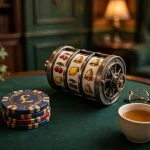
Bonus Buy Slots in the UK: Demos and Real Play
 Available in GB

Explore how bonus-buy options work in slots, what free-play outcomes mean, and why buying a feature does not change long-run expectations.
Table of Contents
- What a Bonus Buy Demo Can—and Cannot—Show
- Bonus-Buy Casinos and Great Britain’s Licensing Framework
- How the Bonus Buy Feature Fits into a Slot
- Slot Formats with a Buyable Bonus
- Bonus-Buy Slots Under Great Britain’s Stake Limits
- Free Play, Simulated Credits and Real-Money Outcomes
- Playing Bonus-Buy Slots Online in Britain
- Volatility and the Shape of Slot Sessions
- Buying a Bonus Does Not Change the Long-Run Expectation
- Finding Slots with a Bonus-Buy Option
- Slots
What a Bonus Buy Demo Can—and Cannot—Show
A demo can make a bonus-buy slot available for play without risking real money. Its credits are simulated: they are not cash, cannot be withdrawn and do not represent a balance held for the player. A demo session awards no payouts. Even when the screen resembles a real-money game, the two settings are not interchangeable.
The main value of a bonus buy demo is observational. It can show how the game presents its options, what information appears on screen and how the interface responds to selections. A demonstration may also let someone see a bonus feature in context, without treating the session as a financial result. These are useful ways to become familiar with a particular game, but they do not establish what will happen in real-money play.
A demo is not a reliable forecast of a later session. A sequence of simulated wins or losses does not show that the same sequence, or a similar one, would occur when money is staked. Nor does a successful bonus round in free play establish that the feature is likely to succeed in another session. The displayed outcome belongs to the demo session; it is not evidence of a future result.
Bonus buy slots let you access a feature directly, but the options and terms can vary. Use this reference to review the available payout-speed information when considering UK slots for 2026.
1. EvoSpin
Payout speed: 1-3 business days EvoSpin lists a payout speed of 1–3 business days.
2. Chanze
Payout speed: 1-3 business days Chanze lists a payout speed of 1–3 business days.
3. SpinFormula
Payout speed: 1-3 business days SpinFormula lists a payout speed of 1–3 business days.
4. Britsino
Payout speed: 1-3 business days Britsino lists a payout speed of 1–3 business days.
5. BeOnBet
Payout speed: 1-3 business days BeOnBet lists a payout speed of 1–3 business days.
6. NightWin
Payout speed: 1-3 business days NightWin lists a payout speed of 1–3 business days.
7. x3bet
Payout speed: 1-3 business days x3bet lists a payout speed of 1–3 business days.
8. NightLuck
Payout speed: 1-3 business days NightLuck lists a payout speed of 1–3 business days.
9. Zombillion
Payout speed: 1-3 business days Zombillion lists a payout speed of 1–3 business days.
10. Jetsetspins
Payout speed: 1-3 business days Jetsetspins lists a payout speed of 1–3 business days.
This distinction matters when a bonus buy can be selected in the demonstration. The option may help show how the game describes that feature and how the interface handles the choice. It does not show that paying for the feature in real-money play would produce the demonstrated outcome. A demo’s simulated credits cannot stand in for money, and a feature shown in a free session does not become a promise of a payout.
What can be assessed in a demonstration
A bonus buy slot demo can be useful for checking practical details of the presentation. The visible rules and labels can be read at a measured pace; menus and controls can be inspected; and the game’s visual style can be considered without a real-money stake. If the feature is available within the demo, its presentation can be observed directly rather than inferred from promotional wording or a short video.
A video of a bonus-buy slot has a narrower purpose. It can show a recorded or streamed sequence, including how the game looks when a feature is activated. It cannot, on its own, establish the full rules or show how often a result occurs. A selected clip is an illustration of that sequence, not a representative sample of every possible outcome. A playable demo may offer more opportunity to inspect the interface, but it remains simulated play.
Video Slots in the UK: Reels, Paylines and Play
The rules displayed in a game can clarify what its symbols, options or features mean. Reading them is different from measuring the chance of a result. A demo may show the stated conditions for a feature, but seeing an outcome during play does not reveal how likely it is. A short session, whether played or watched, cannot be treated as statistical evidence about real-money performance.
What a demo cannot establish
The word “demo” can suggest a faithful rehearsal of paid play, but the label alone does not justify that conclusion. The session uses simulated credits and awards no money. Without evidence that a particular demonstration reproduces the conditions of real-money play, its outcomes cannot be used to compare expected results or to predict a future balance. Similar appearance is not proof of identical conditions.
This also limits comparisons between titles. A demo can support a comparison of visible features, instructions and interface design. It cannot show, from a few observed outcomes, that one game is more rewarding than another. Nor does a bonus appearing quickly in one session establish that it will appear quickly in another. Such interpretations confuse the particular sequence on screen with evidence about the game’s broader behaviour.
The same restraint applies to claims based on repeated free sessions. Replaying a demo may reveal more of the interface and may produce different sequences, but accumulated simulated results remain simulated results. They do not become real-money outcomes through repetition. A long run of demo play is still not a record of money won or lost.
Attention: A demo session uses simulated credits and awards no payouts; it is not a reliable forecast of real-money play results.
For someone considering the best bonus buy slots to try in demo mode, the useful question is therefore limited: does the demonstration make the game understandable enough to assess its presentation and stated rules? It cannot answer whether a real-money session will pay, whether a purchased feature will be favourable, or whether a particular outcome is due. Keeping those limits clear allows a demo to serve as an inspection tool without mistaking it for evidence about financial results.
Bonus-Buy Casinos and Great Britain’s Licensing Framework
A casino that offers slots with a bonus-buy option remains part of the wider remote-gambling market; the feature does not create a separate category of casino licensing. For Great Britain, the relevant question is whether the operator is authorised to provide remote gambling to consumers in the market. The UK Gambling Commission oversees gambling activity, including online casinos, and regulates remote gambling offered to people in Great Britain even when the operator’s key equipment is located elsewhere.
This distinction matters because a casino’s description of its games is not evidence of its regulatory status. Terms such as “bonus-buy casino” describe an aspect of the games on offer, not a licence issued for that feature. A site may advertise slots that allow a bonus to be purchased, but that wording alone does not establish whether the business is authorised to serve customers in Great Britain. Licensing concerns the operator and its gambling activity, rather than the marketing label attached to a particular game option.
3-Reel Slots in the UK: Formats and Play Options
The Commission issues operating licences to businesses and personal licences to individuals working in relevant roles in the gambling sector. These are different forms of authorisation: the operating licence relates to the business providing gambling, while a personal licence applies to an individual. For someone assessing an online casino, the operator’s authorisation is therefore more pertinent than whether the website describes itself as a bonus-buy casino or lists games with that feature.
The Commission is the only regulator for commercial gambling in Great Britain. In practical terms, that places remote casino operators serving the market within a common regulatory framework, rather than allowing each operator to define its own licensing standard. The location of the company’s equipment does not, by itself, remove the requirement for the relevant oversight when remote gambling is offered to Great Britain consumers.
The regulatory position should not be confused with a guarantee about an individual game or a particular session. An operator’s licence concerns permission to provide gambling services under the applicable framework; it does not mean that a purchased bonus will produce a particular result. Nor does a casino’s use of licensed-sounding language establish that the Commission has authorised the business. The site’s actual operator and its regulatory status are the relevant points, not the phrasing used in a banner or game description.
For the same reason, “casino buy bonus UK” and similar labels can obscure the distinction between a game feature and the status of the business offering it. The feature may be available through an online casino, but the presence of the feature is not itself a measure of oversight. A licensed operator remains accountable as a gambling business, while the term “bonus buy” identifies what a game may let a player do. Treating those as separate questions avoids attributing regulatory meaning to a product label.
Licensing and Regulatory Status
An operator’s authorization is determined by the UK Gambling Commission, regardless of whether the site describes itself as a bonus-buy casino.
Great Britain’s framework also has a defined scope. The Commission regulates remote gambling offered to consumers in Great Britain regardless of where the key equipment is based. That principle makes the service being offered to the market central to the regulatory question. A business cannot establish that it falls outside the framework simply by locating technical infrastructure in another country.
When considering a casino that offers bonus-buy slots, the sound distinction is therefore between the operator’s authority and the game’s features. The former belongs to the licensing framework; the latter belongs to the presentation and structure of the slot. Neither the name of a casino category nor an advertised feature substitutes for the operator’s regulatory status. This keeps licensing claims tied to the business that provides the gambling service, without implying that the feature carries a separate approval or special status.
How the Bonus Buy Feature Fits into a Slot
A bonus-buy feature is an option within some slots that allows a player to enter a bonus round by making a separate purchase, rather than waiting for the round to be triggered during ordinary play. It changes how the feature is reached; it does not turn the slot into a different kind of game. Where the option is available, its terms form part of that game’s rules.
A slot commonly has a base game, in which spins produce symbols and may trigger features, and one or more bonus rounds with different rules. In a game with a buyable bonus, the player can choose between continuing in the base game and paying to access the specified round directly. The purchase is therefore a distinct choice within the game, not simply another name for a regular spin.
UK Casino Slot RTP: Understanding Long-Run Returns
That distinction matters when reading the game’s betting information. A normal spin applies a stake according to the slot’s structure. In a five-reel slot, for instance, a bet can be applied across all five reels. The bonus-buy option is an additional feature with its own stated cost and conditions; the cost should not be assumed to mean the same thing as the stake on a standard spin. The game rules determine how the purchase is priced and what it activates.
The word “bonus” can also obscure differences between games. A purchase may provide access to a particular bonus round, but the contents and rules of that round depend on the individual slot. The label alone does not establish how many stages it contains, which symbols appear, or how any prize is calculated. Those details need to be read in the game’s information rather than inferred from the feature name.
For the same reason, “slots with a bonus-buy feature” describes an option, not a common game design shared by every title. The placement of the option, the way its cost is shown and the bonus it opens can vary. Some games may not offer a purchase at all; in others, the option may apply only to a particular feature. A game’s rules are the relevant source for confirming what can be bought and what follows from that choice.
The feature also changes the route through a slot, rather than removing the underlying structure. The base game remains part of the design even when a direct entry to a bonus is offered. A purchase does not, by itself, establish that a bonus will produce a particular result or that it is preferable to ordinary play. It specifies access under the game’s terms, not an outcome.
How the Bonus Buy works
A player can choose to pay a specific cost to access a bonus round directly, rather than waiting for it to be triggered by symbols during ordinary base game spins.
This is the useful distinction when considering bonus-buy feature slots: the slot supplies the rules and the available game states, while the purchase offers one way of reaching a defined feature. The term does not identify a separate reel format or a guarantee of a particular result. Reading the game’s explanation of its stake, purchase conditions and bonus rules gives a clearer account of how the option fits into the slot.
Slot Formats with a Buyable Bonus
A slot’s format describes how its base game is arranged and how winning combinations are formed. A buyable bonus, where offered, is an additional feature within that game; it does not define the reel layout or payline system. As a result, the format label alone cannot establish whether a particular title lets players buy a bonus. That detail is specific to the game.
Reel-based slots can differ in the number and arrangement of reels, the way symbols connect, and whether the game uses paylines or another win system. A five-reel slot may apply a bet across all five reels, while its bonus round can still be built around a separate set of rules. In a title with a buy option, those rules matter: the feature might use the same symbols and win logic as the base game, or introduce a distinct bonus layout. The format gives a starting point for understanding the game, not a reliable description of every bonus feature.
High-RTP Slots in the UK: How to Compare
Paylines are one way to organise a slot’s wins, but they are not the only structural distinction between games. Some formats evaluate symbol arrangements across defined lines; others may use different methods of forming combinations. A bonus round can be designed around the same structure or depart from it. For instance, the main game may use reels while a bonus presents a separate screen or sequence. Such distinctions describe possible game designs, not a guarantee that the bonus can be purchased.
Low-volatility slots typically have five reels and at least twenty-five paylines. Their jackpots are fixed rather than drawn from progressive pools, and bonus rounds may multiply wins accumulated during play. These features show how several elements can coexist within one format: reel count, payline structure, jackpot design and bonus rules are separate characteristics. A buyable feature, if present, would be another title-specific element rather than a consequence of those characteristics.
Other useful format distinctions concern how the game handles symbols and bonus stages. A title may build a bonus around a reel-based arrangement, or use a different presentation for the feature. The relevant question is not merely whether the game is described as a reel slot, but how its bonus is structured and whether the game’s rules identify a purchase option. Names such as “ways” or “cluster” describe approaches to forming wins; they do not, by themselves, indicate that a bonus buy is available.
This matters when comparing slots with bonus-buy options. Two games may share a broad format yet differ in their bonus rules, while games with different base-game structures may present similar kinds of bonus rounds. Labels can therefore help organise a comparison, but they cannot substitute for the individual game’s information. The format tells how the slot is built; the rules determine how its features work.
Reel-based Slots
Use an arrangement of reels where win logic may be shared between the base game and the bonus layout.
Payline Slots
Organise wins across defined lines, though the bonus round may depart from this structure.
Low-Volatility Slots
Typically feature five reels and twenty-five+ paylines with more frequent, smaller wins.
Bonus-Buy Slots Under Great Britain’s Stake Limits
A specialist review of the UK market reports two maximum stake levels for online slots in Great Britain: £5 per game cycle for customers aged 25 and over, and £2 for those aged 18 to 24. The difference is based on age, not on whether a slot offers a bonus-buy option. These limits therefore provide relevant context for bonus-buy slots, but do not establish how a particular game presents or calculates its feature price.
The phrase “per game cycle” matters. A slot cycle is the period in which a stake is committed and the game resolves its result. A bonus purchase may change what happens within a slot, but it does not create an additional allowance beyond the applicable stake cap. The amount staked in a cycle remains subject to the limit for the customer’s age group.
This makes the displayed cost of a bonus buy a figure to interpret in the context of the game’s stake, rather than as an automatic exception to the rules. The game interface may show a purchase price or a total cycle stake; those labels are not necessarily interchangeable. Without information about how a specific slot accounts for the purchase within its cycle, the display alone should not be taken as proof that the relevant limit is being observed. The material point is the amount staked in the cycle, under the applicable age-based cap.
Fruit Machine Slots UK: How Online Games Work
The distinction is particularly relevant when a bonus purchase appears much larger than an ordinary spin. A larger displayed amount does not by itself show whether it is a separate charge, part of the stake for that cycle, or calculated through another game-specific presentation. Nor does the availability of a buy feature alter the age bands. The reported limits concern online slots as a category, rather than only standard spins or only games with a purchase option.
For a bonus-buy slot in Great Britain, the stake context can therefore be summarised without ranking games: the applicable maximum depends on whether the customer is aged 25 or over, or is aged 18 to 24; the relevant unit is the game cycle; and a feature purchase does not, by its presence alone, establish a separate limit. Any interpretation of a particular price depends on how that game presents the stake and cycle.
These figures are reported in a specialist review and should be read as a description of the stated limits, not as a claim that every game displays its stake in the same way. In practice, the distinction between a bonus-buy price and the total amount staked in a cycle is important to understanding how the age-based cap applies.
Free Play, Simulated Credits and Real-Money Outcomes
Free play changes the meaning of the balance shown on a bonus-buy slot. Credits displayed in a free-play version are simulated units, not funds held in a gambling account. They cannot be withdrawn, transferred or exchanged for cash. A bonus feature activated with them is also part of a simulated session: it does not create a payment entitlement, and the session awards no payout.
Do
- Use free play to inspect the interface
- Use demos to check the stated rules
- View simulated credits as training tools
Don’t
- Treat demo wins as real money
- Assume simulated results predict payouts
- Mistake a demo for a financial result
This distinction matters when a game presents the same interface in free-play and real-money modes. The reels, symbols and bonus presentation may look alike, but the balance does not represent the same thing. A simulated credit balance records activity within the demonstration; it is not evidence that money has been staked or won. A displayed result in that mode therefore has no cash value.
In real-money play, by contrast, a stake uses money in the gambling account. Any resulting balance is part of real-money gambling, subject to the operator’s terms and the rules that apply to the game. Choosing a bonus-buy option in that setting is not merely a change to a display or a way to spend demonstration credits: it concerns a real stake. The precise amount and conditions depend on the particular game and operator, so the free-play screen alone cannot establish them.
The label attached to a game should be read in that context. “Free play” or “demo” indicates simulated activity, not a no-cost route to real winnings. “Bonus buy” describes an available game feature, but its presence in a free-play version does not mean that the feature can produce withdrawable funds there. Nor does a simulated result establish what would happen in real-money play.
For UK players, real-money online gambling is legal only through an operator holding the relevant UK Gambling Commission licence, and play is restricted to people aged 18 and over. That legal distinction does not turn demo credits into money: free-play sessions remain simulations, while real-money sessions involve actual funds. The mode being used should therefore be clear before interpreting any balance or result.
Penny Slots in the UK: Stakes, RTP and Free Play
A free-play version can provide access to the game without making the displayed credits a financial asset. It cannot be treated as a source of winnings or as a record of real-money outcomes. For bonus-buy slots, keeping those categories separate prevents a simulated feature purchase from being mistaken for a real transaction, and prevents an on-screen win from being read as money payable to the player.
Playing Bonus-Buy Slots Online in Britain
Online bonus-buy slots remain subject to the rules that apply to online slots generally in Great Britain. The presence of a feature that starts a bonus round does not exempt a game from requirements on how a slot cycle is conducted. In particular, a game cannot be configured to let a player move immediately from one spin to the next without the required interval.
At least 2.5 seconds must pass from the start of one game cycle before another can begin. This applies to online slot play, including when a bonus feature is bought rather than reached through ordinary spins. The interval is a minimum, not a prescribed pace: a game may take longer, and the player may also pause between cycles. A fast interface or a single control for placing a wager does not remove the time requirement.
Autoplay is prohibited for online slots in Britain. A sequence of spins therefore cannot be set to run automatically while the player remains inactive. Each new cycle must be initiated through the game interface, subject to the minimum duration rule. This distinction matters for bonus-buy play as well as standard spins: purchasing access to a feature does not make subsequent slot cycles exempt from the rules governing the game.
UK Slot Regulations
Autoplay is prohibited for online slots in Britain, and a minimum interval of 2.5 seconds must pass between the start of game cycles.
These constraints apply to the online game, not merely to the way a casino describes or presents it. The rules do not establish that bonus-buy slots are banned in Britain; they constrain how online slot play is delivered. The feature itself and the controls around it must operate within the same setting as other online slot play.
A free-play version may have a different practical setting from a real-money game, but it should not be taken as evidence that real-money play is unrestricted. In a real-money session, the regulated game cycle and the player’s actions remain subject to the online-slot requirements. The minimum interval does not indicate how long a full bonus round will take, nor does it provide a measure of the time needed to complete a session. It sets a boundary between the start of one cycle and the point at which another may begin.
Consequently, descriptions of online bonus-buy slots should be read alongside the rules for online slot operation. A buyable feature does not permit autoplay, remove the required pause between cycles or create a separate category outside Britain’s slot controls. The relevant distinction is between the feature a game offers and the conditions under which each online game cycle can proceed.
Volatility and the Shape of Slot Sessions
Volatility describes how a slot’s returns tend to be distributed, not whether a particular session will produce a win. Low-volatility slots spread returns across more frequent, smaller wins. High-volatility slots pay less often, with wins tending to be larger when they occur. These patterns can make sessions feel quite different, even when both games use a bonus-buy option.
Progressive Slots Online in the UK: How Jackpots Work
Across most low-volatility titles, winning combinations typically appear every three to six spins on average. That is a general pattern, not a schedule: it does not mean that a win is due after a set number of losses, or that every session will match the average. A run of spins can still contain no winning combination, and a combination does not necessarily return the amount staked.
In a high-volatility game, longer stretches without a win may be part of the game’s return pattern. A larger win may occur less often, but its timing and size are uncertain. The contrast is therefore about the distribution of outcomes, not a reliable choice between steady profit and occasional profit. Neither label predicts what happens in a particular run of play.
For bonus buy slot games, volatility remains relevant to the session after a feature is entered. Buying access to a bonus does not, by itself, make the surrounding game low-volatility or ensure that the feature returns a particular amount. The session can include the cost of entering the feature alongside its outcome, and the volatility of the game shapes how wins are distributed around that choice.
A slot’s volatility label is most useful as a broad description of its design. It cannot establish the likely result of an individual session, and comparisons between games should not be treated as promises about win frequency or size. Two sessions on the same slot can differ substantially: one may include several small wins, while another may have longer gaps between winning combinations.
Volatility and Outcomes
- Low volatility typically means more frequent, smaller wins.
- High volatility involves longer gaps between wins, which tend to be larger.
- Volatility labels describe design patterns, not guaranteed results for any individual session.
This distinction matters when comparing slot games where a bonus can be bought. The presence of a purchasable feature does not tell whether wins will be frequent or rare. That depends on the game’s volatility, while the actual sequence of outcomes remains uncertain.
Buying a Bonus Does Not Change the Long-Run Expectation
A bonus buy changes the way a slot session begins: instead of waiting for a feature to occur through ordinary play, the player selects an option that enters it. That choice may alter the shape of an individual session, but it does not by itself establish that the game offers better long-run results. The relevant distinction is between choosing a feature and changing the game’s mathematical expectation.
For any game with a positive house edge, the mathematical expectation is negative over enough sessions. The timing of wins and losses does not remove that condition. A bonus round may produce a different sequence of outcomes from the base game, but its presence is not evidence that the overall expectation has become favourable. Nor does an unusually good result in one session show that the feature has changed the underlying long-run relationship.
This matters when considering slots with a buyable bonus in the UK. The availability of a purchase option describes a feature, not a reliable route to improved returns. A player may reach the bonus more directly, but that immediacy is not the same as an advantage. The cost of entering the feature is part of the wager, and the outcome remains subject to the game’s mathematical structure.
It is therefore not possible to infer from the feature alone which slots offer better prospects, or that buying a bonus will produce a better result than ordinary play. Such a conclusion would require evidence about the game’s overall mathematics, not simply the fact that a bonus can be selected. Even then, a theoretical expectation describes results across enough sessions; it does not predict the outcome of a particular one.
Classic Slots Online in the UK: How to Play
The distinction also prevents short-term results from being mistaken for proof. A feature can coincide with a substantial win, or with a loss, without either outcome establishing its long-run value. The available fact remains general: where a game has a positive house edge, its expectation is negative over enough sessions, however gradually losses arise. A bonus purchase changes the immediate play choice, not that principle.
Finding Slots with a Bonus-Buy Option
A bonus-buy option is a feature of an individual slot, not a standard facility across casino games. Its availability is normally indicated in the game’s information panel or interface, where the rules explain whether a bonus round can be entered directly and how the option is presented. The feature should not be assumed to exist just because another game from the same provider offers one.
Casino catalogues may include filters or labels for bonus-buy games, but these are a starting point rather than confirmation. Availability can vary between casinos, and a game’s own information is the more relevant place to check. The title, provider and displayed rules can help distinguish games with a buyable bonus from those where the bonus is reached only through ordinary play.
For UK players, the search belongs within the licensed-casino market. Real-money gambling is legal in the UK only through sites holding the relevant UK Gambling Commission licence. A game appearing in an online catalogue does not, by itself, establish that the casino is authorised to offer it to UK customers. The operator’s licence can be checked on the Commission’s public register.
Terms such as “best bonus-buy slots” do not identify a consistent category of quality. Games may differ in design and rules, while a buy option alone does not establish that one title is preferable to another. A careful comparison therefore starts with the game’s own feature information and the operator’s licensing status, rather than treating a catalogue label as an endorsement or guarantee.
Slots

Aviator Casino Game in the UK: Categories and Evidence
A cautious guide to game categories, UK regulation, access, bonuses and claims that available evidence...

3-Reel Slots in the UK: Formats and Play Options
A guide to classic reel layouts, free-play versions, slot odds and how UK regulation applies...

Best 5-Reel Slots in the UK: Browser Play Guide
A practical overview of browser access, demo play, reel and bet layouts, bonus limits, volatility...

High-Volatility Slots in the UK: What to Expect
Volatility describes how often wins tend to occur and how large they may be, not...

Best Low-Volatility Slots in the UK: What to Know
Low volatility usually means smaller, more frequent returns, but wins are not scheduled and a...

Progressive Jackpot Slots: A UK Guide to How They Work
Progressive prizes build from eligible wagers, while game triggers, RTP and bonus conditions affect how...

UK Casino Slot RTP: Understanding Long-Run Returns
RTP is a theoretical measure of a slot’s return over repeated play, not a forecast...

Video Slots in the UK: Reels, Paylines and Play
A practical guide to reading game rules, understanding variance and comparing free-play and real-money slot...

Casino Dice Games in the UK: Rules and Limits
An overview of online dice games, UK regulation, random outcomes and the limits of what...

Chicken Road Game Casinos in the UK: What to Check
A casino-related label does not establish how Chicken Road works or whether a particular casino...

Classic Slots Online in the UK: How to Play
A practical guide to demo play, classic slot features, active lines, offers, stake limits and...

Crash Casino Games in the UK: Rules and Risks
An evidence-led look at regulation, bonus terms, game claims, payment options and what can—and cannot—be...

Fruit Machine Slots UK: How Online Games Work
Online versions keep familiar reels and symbols, while software generates each outcome independently. How Online...

UK Casino Slot Sites: RTP, Rules and Real-Money Play
A practical guide to slot returns, UK site rules, payments, bonuses, jackpots and the limits...

High-RTP Slots in the UK: How to Compare
RTP describes a theoretical return over extensive play, not a guaranteed result or forecast for...

Jackpot Mobile Casino UK: Games, Rules and Payments
Jackpot labels describe prize structures, while licensing, verification, limits and mobile access shape how UK...

JetX Casino Game in the UK: Slot or Crash Game?
The article examines slot and crash-game wording, free-play claims, casino incentives and the UK licensing...

Mines Casino Game in the UK: What to Know
Understand what can be verified about Mines games, bonuses, demo tools, random outcomes and UK...

Online Bingo UK: Formats, Slots and Real-Money Play
An overview of bingo patterns and ticket play, plus what the article covers about slots,...

Online Casino Games for Real Cash in the UK
Slot paytables define qualifying patterns, while licensing, verification, bonus terms and payout wording shape the...

Online Casino Tournaments UK: Formats and Rules
Slot tournaments can differ in how players qualify, how scores are decided and what rewards...

Online casino without ID in the UK: what it means
A missing document request at registration does not mean identity and age checks will never...

Penny Slots in the UK: Stakes, RTP and Free Play
A practical guide to minimum spin costs, stake settings, random outcomes, bonuses and what demo...

Plinko Casino UK: Licensing, Offers and Payments
A guide to the UK regulatory distinction and the limits of what casino listings, promotions...

Progressive Slots Online in the UK: How Jackpots Work
Progressive slots pool contributions from wagers, while jackpot triggers and game structure affect how prizes...